advancements in microcontroller boards: RP2350, ARM, RISC-V
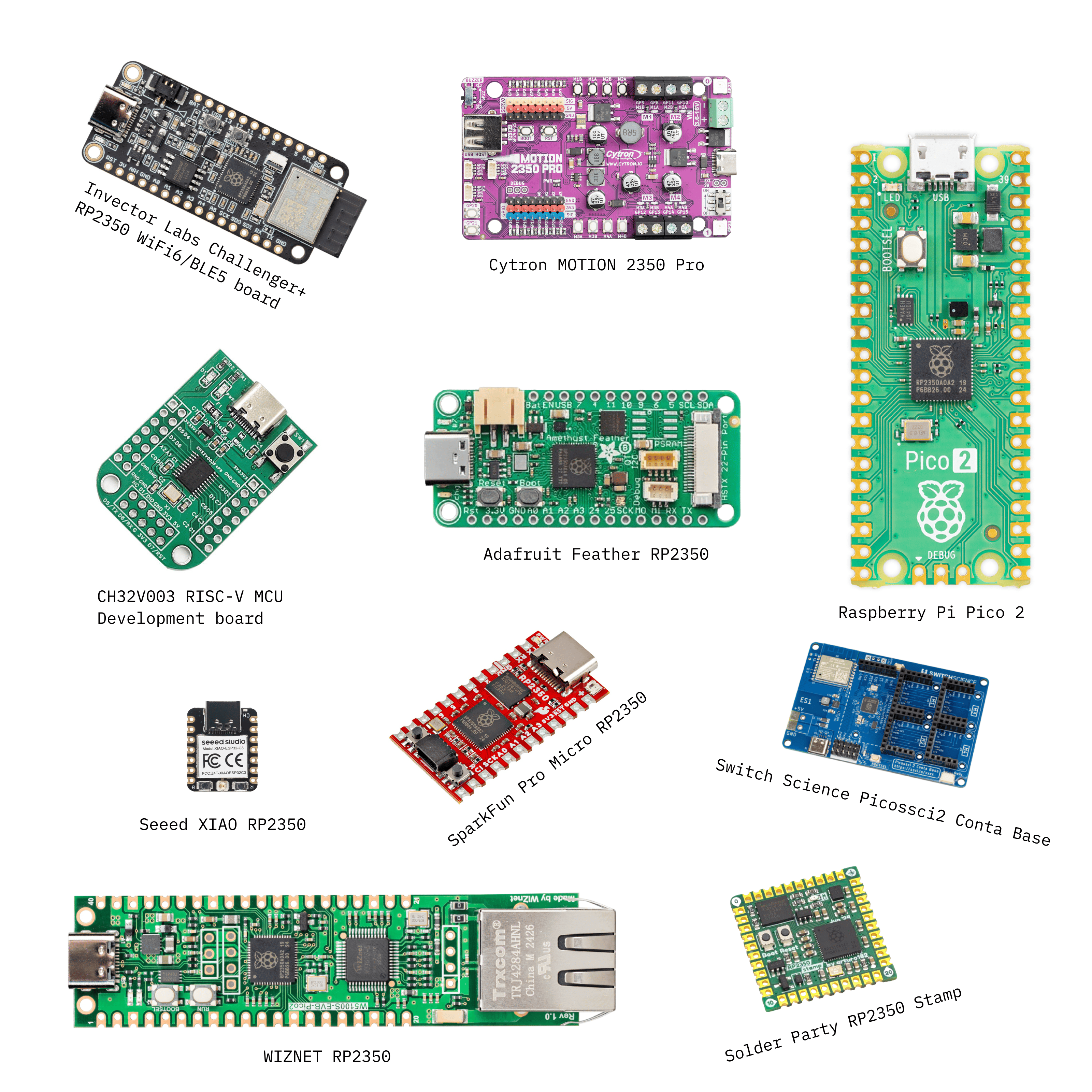
The world of microcontroller boards is experiencing rapid evolution, driven by innovations in chip design and competing processor architectures. These advancements are expanding the capabilities of embedded systems across various applications.
RP2350: A New Frontier
The RP2350, following in the footsteps of Raspberry Pi’s successful RP2040, represents the next generation of accessible yet powerful microcontrollers. While specific details may vary, we can anticipate improvements in processing power, energy efficiency, and integrated features. This chip is poised to enable more sophisticated embedded projects while maintaining the user-friendly approach that has made Raspberry Pi popular among developers and hobbyists alike.
ARM vs. RISC-V: Architectural Competition
The ongoing rivalry between ARM and RISC-V architectures continues to shape the microcontroller landscape:
✿ ARM:
-
Maintains its position as the industry standard
-
Offers a mature ecosystem with extensive software and development tool support
-
Continues to improve performance and energy efficiency
✿ RISC-V:
-
Gains traction as an open-source alternative
-
Provides flexibility for customization and specialization
-
Attracts investment from both established companies and startups
This competition is driving innovation in several key areas:
-
Performance: Both architectures are pushing for higher clock speeds and more efficient instruction execution.
-
Power Efficiency: Crucial for battery-powered and IoT devices, both ARM and RISC-V are focusing on reducing power consumption.
-
Specialized Instructions: Tailored instruction sets for tasks like machine learning and cryptography are becoming more common.
-
Cost-Effectiveness: The open nature of RISC-V is putting pressure on licensing models, potentially leading to more affordable solutions.
As these technologies advance, we’re seeing microcontroller boards capable of more complex tasks, from sophisticated IoT applications to edge AI processing. The RP2350, along with other cutting-edge microcontrollers based on both ARM and RISC-V architectures, is set to push the boundaries of what’s possible in compact, low-power computing.
This evolving landscape offers developers an expanding array of options, each with unique strengths in performance, power consumption, and ecosystem support. As a result, the future of embedded systems looks promising, with more powerful, efficient, and versatile microcontroller boards on the horizon.