Teaching My First Workshop: Soft Circuit Boards at ITP Camp
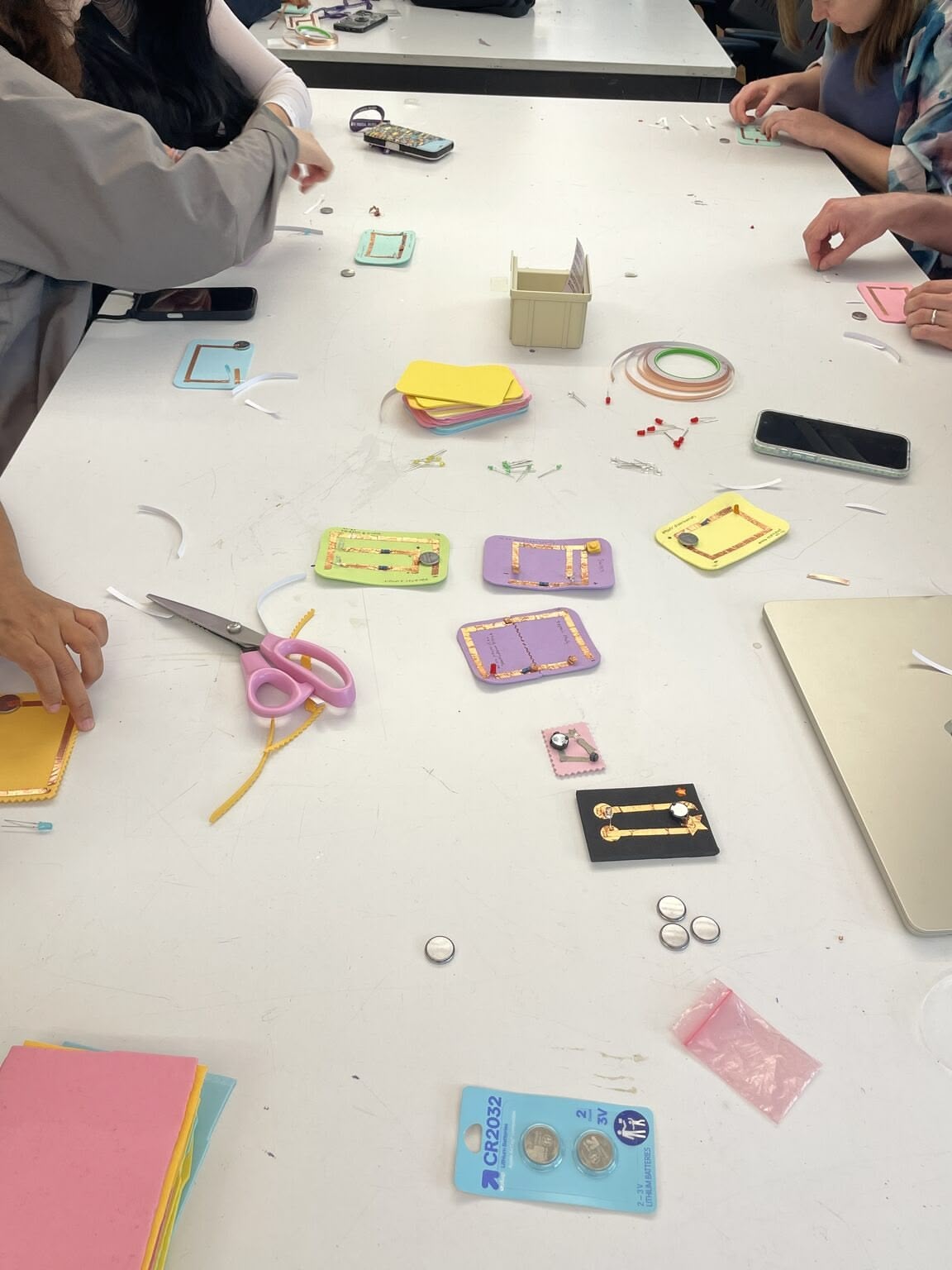
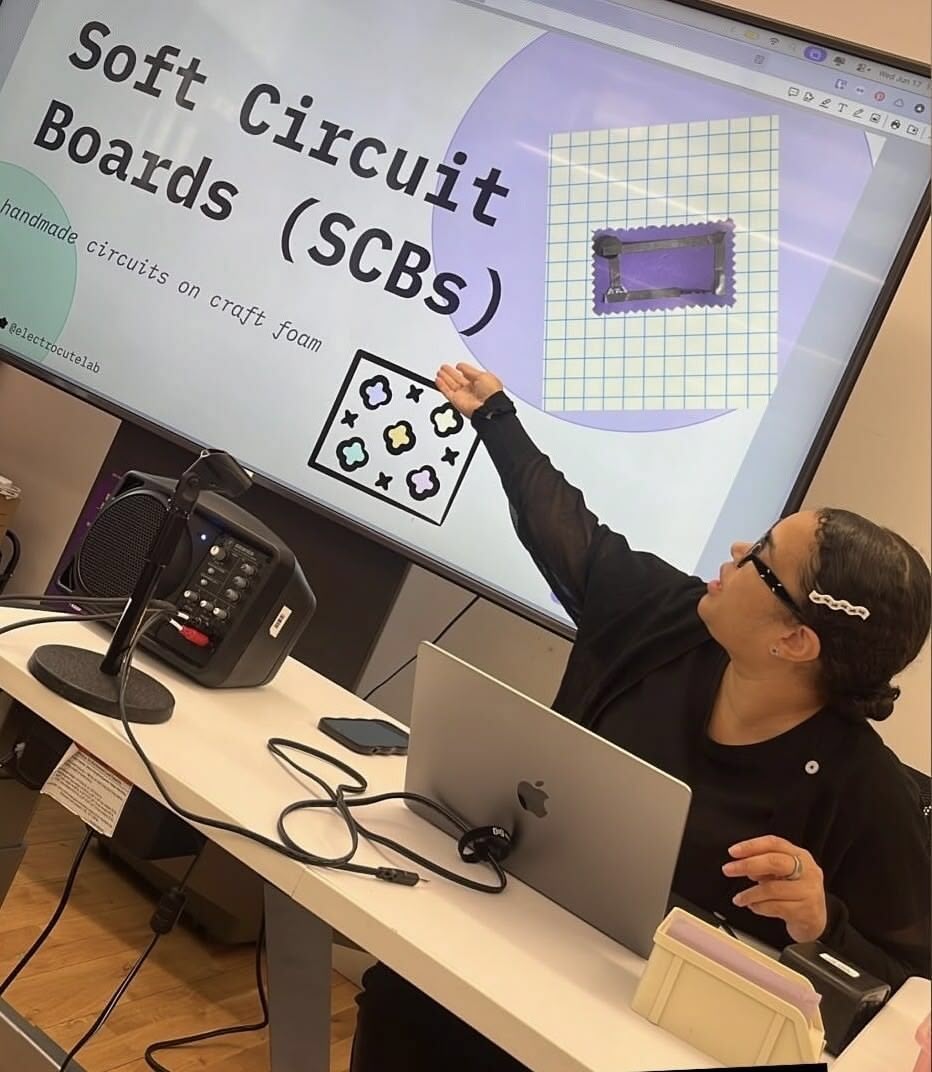
I taught my very first workshop last week at ITP Camp — Soft Circuit Boards: handmade circuits on craft foam. The premise: what if you could make your own circuit board by hand? No etching, no soldering, no factory. Just copper tape, craft foam, LEDs, and a coin cell battery.
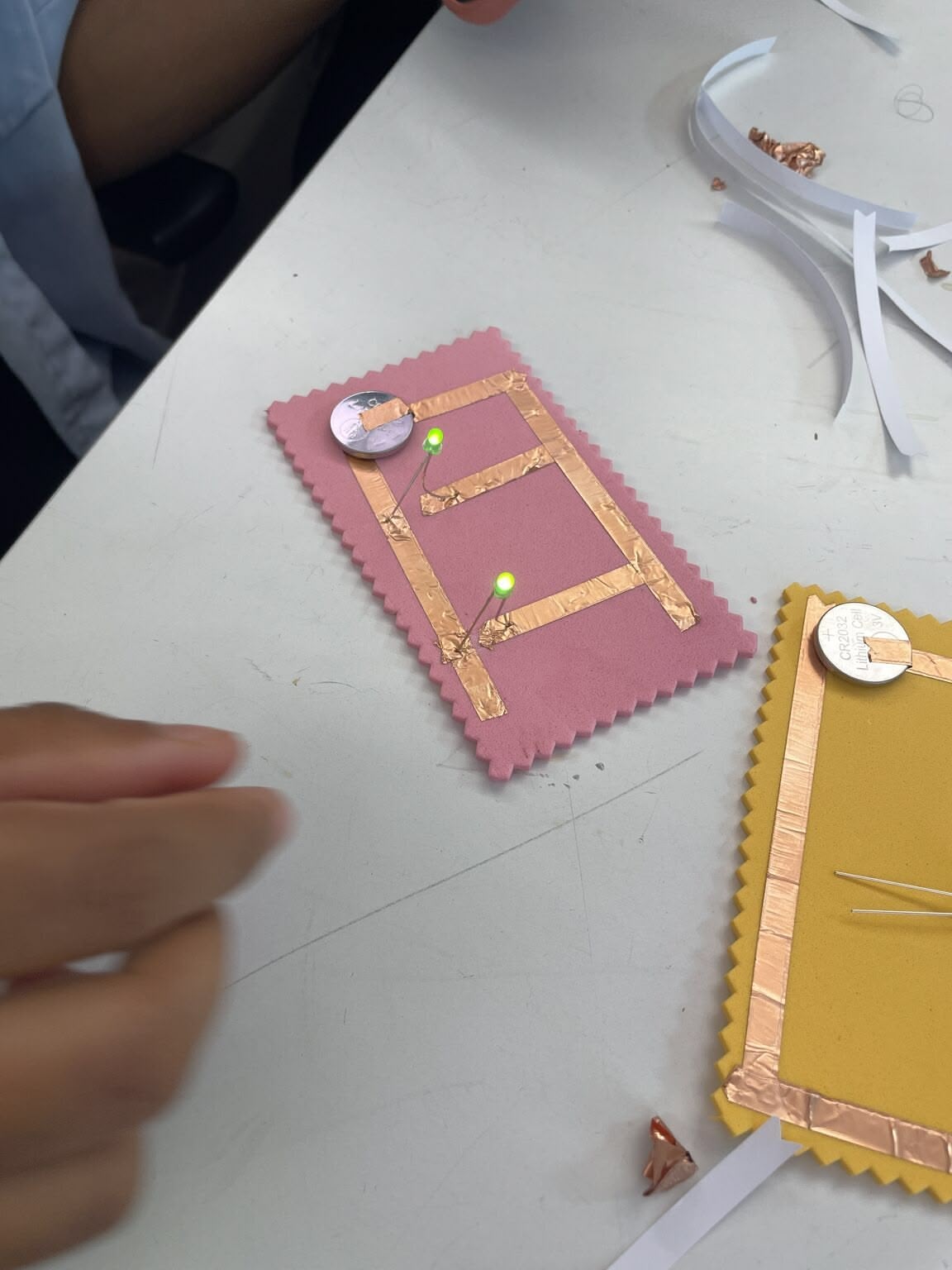
I designed two tracks: a beginner circuit (a simple LED loop with a switch gap) and an experienced one (two LEDs in parallel with a fold switch), pre-cut the foam cards ahead of time, and put together a slide deck with circuit diagrams and step-by-step instructions. 8 participants, 1 hour, zero prior electronics experience required.
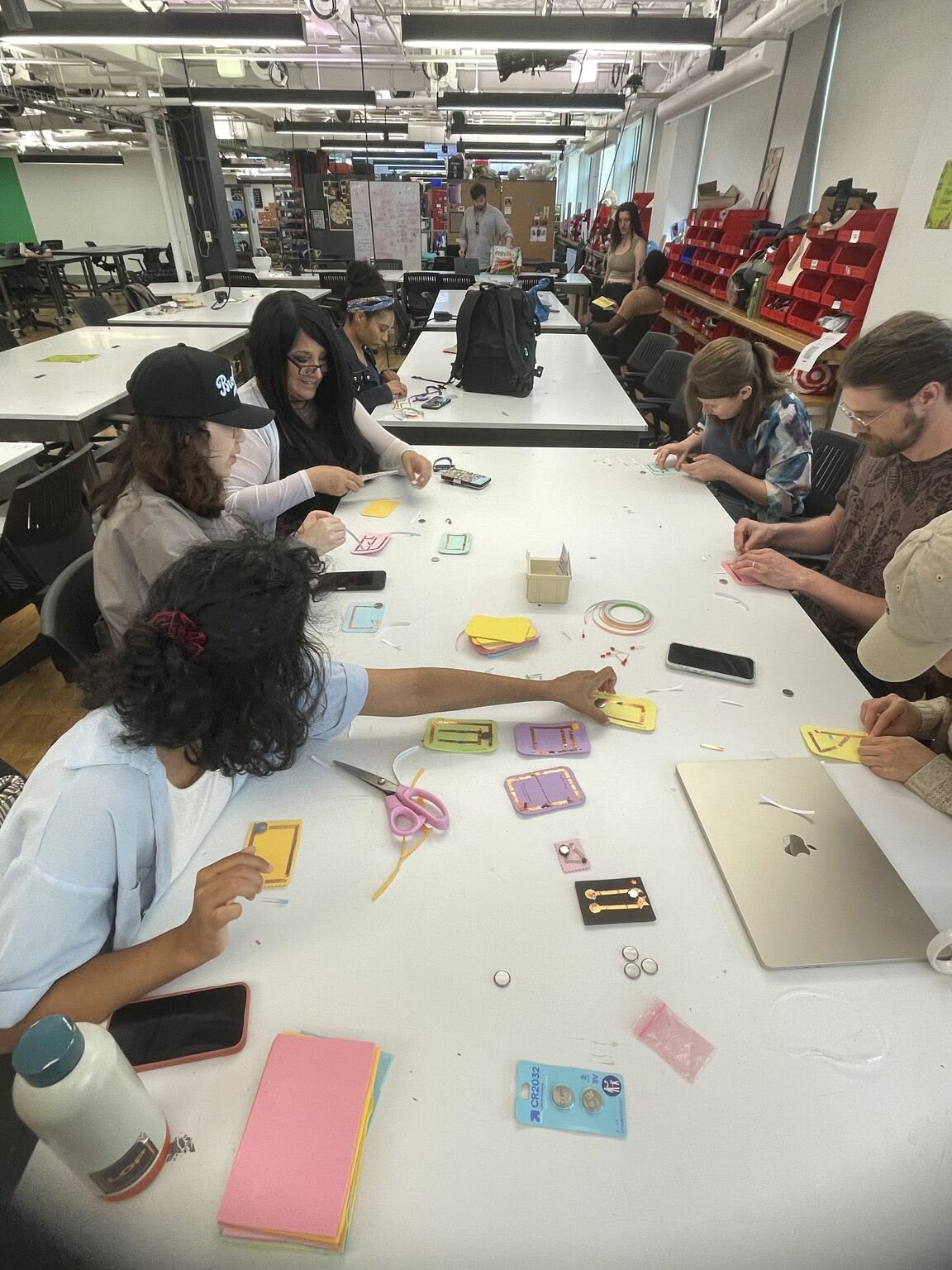
Seeing people’s circuits light up was genuinely the best part.
The SCB (Soft Circuit Board) is something I’ve been developing through my practice at Electrocute Lab and its extension, Soft Interfaces — same logic as a real PCB, just built with craft materials. Copper tape replaces etched copper. Craft foam replaces fiberglass. Pressure and overlap replace solder. The electrical logic is identical.
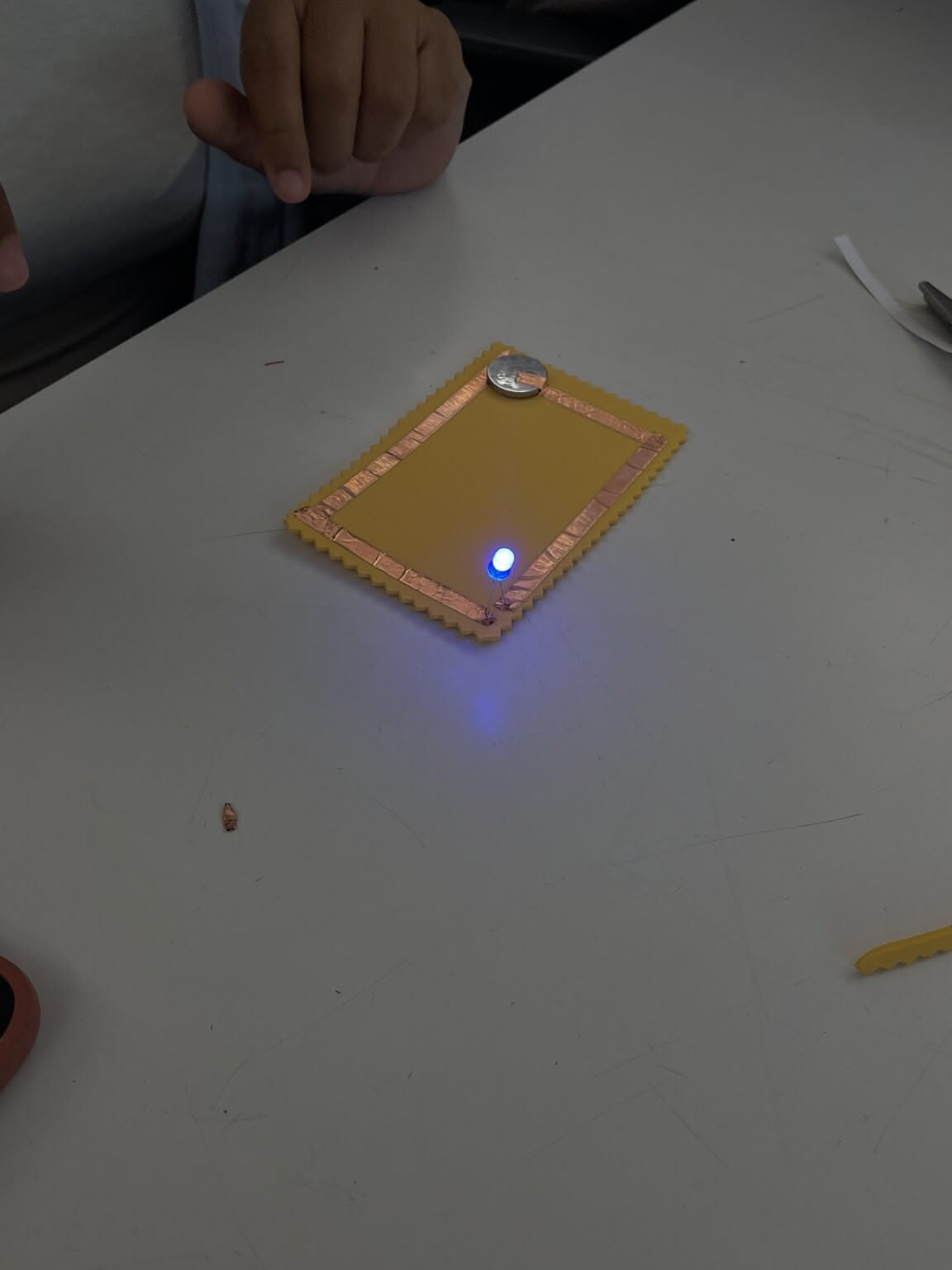
Craft foam is just one substrate, too — the same approach works on fabric, paper, or any flexible material. As flexible and hybrid circuits become more prevalent in wearables, soft robotics, and alternative interface design, handmade circuit-making becomes a genuinely useful entry point. SCBs sit at that intersection: low barrier, high transferability.
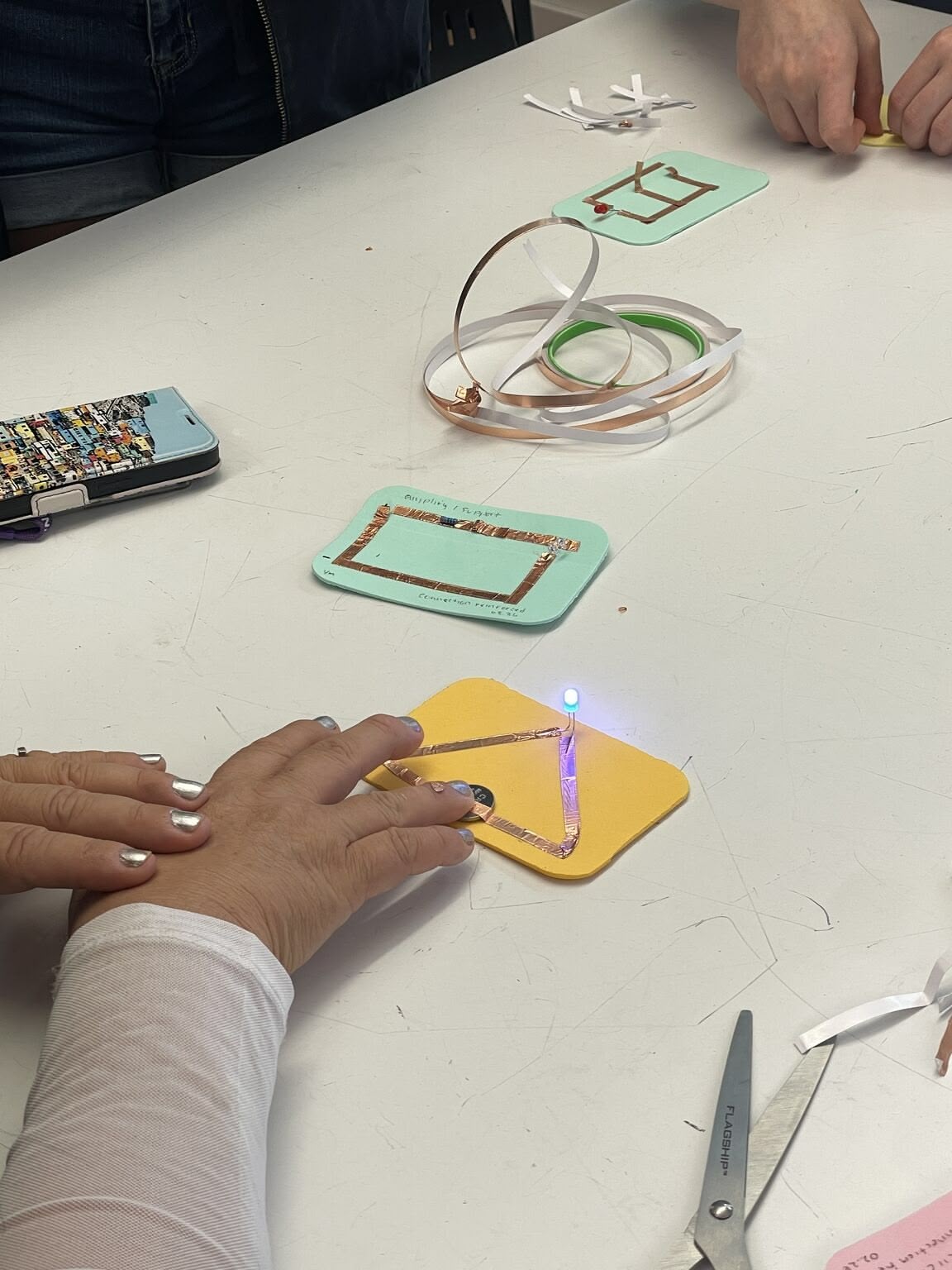
if you want to run this yourself, the full slide deck is here — beginner and experienced tracks, both circuit diagrams, step by step.
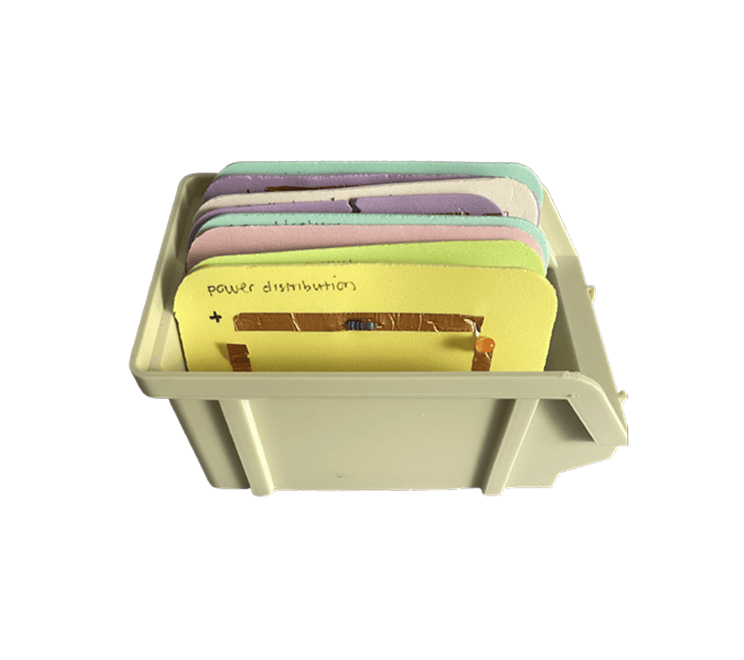
This workshop grew directly out of the Soft Circuit Library, a project I exhibited earlier this year at the Electronics Faire at Temple University — a collection of handmade circuit cards housed in an archival index box, each one a working circuit with visible traces, repair annotations, and a coin cell battery. Same idea, same materials, just opened up for everyone to make their own.
Teaching this was a first for me, and I want to keep going. I’m already planning to iterate toward more complex circuits over time, but I’d happily run this beginner version for anyone curious about the overlap between craft and hardware. There’s something about making a circuit by hand that no simulation or diagram can replace. ☻