Building Soft Components: A Digital Library for Soft Electronics
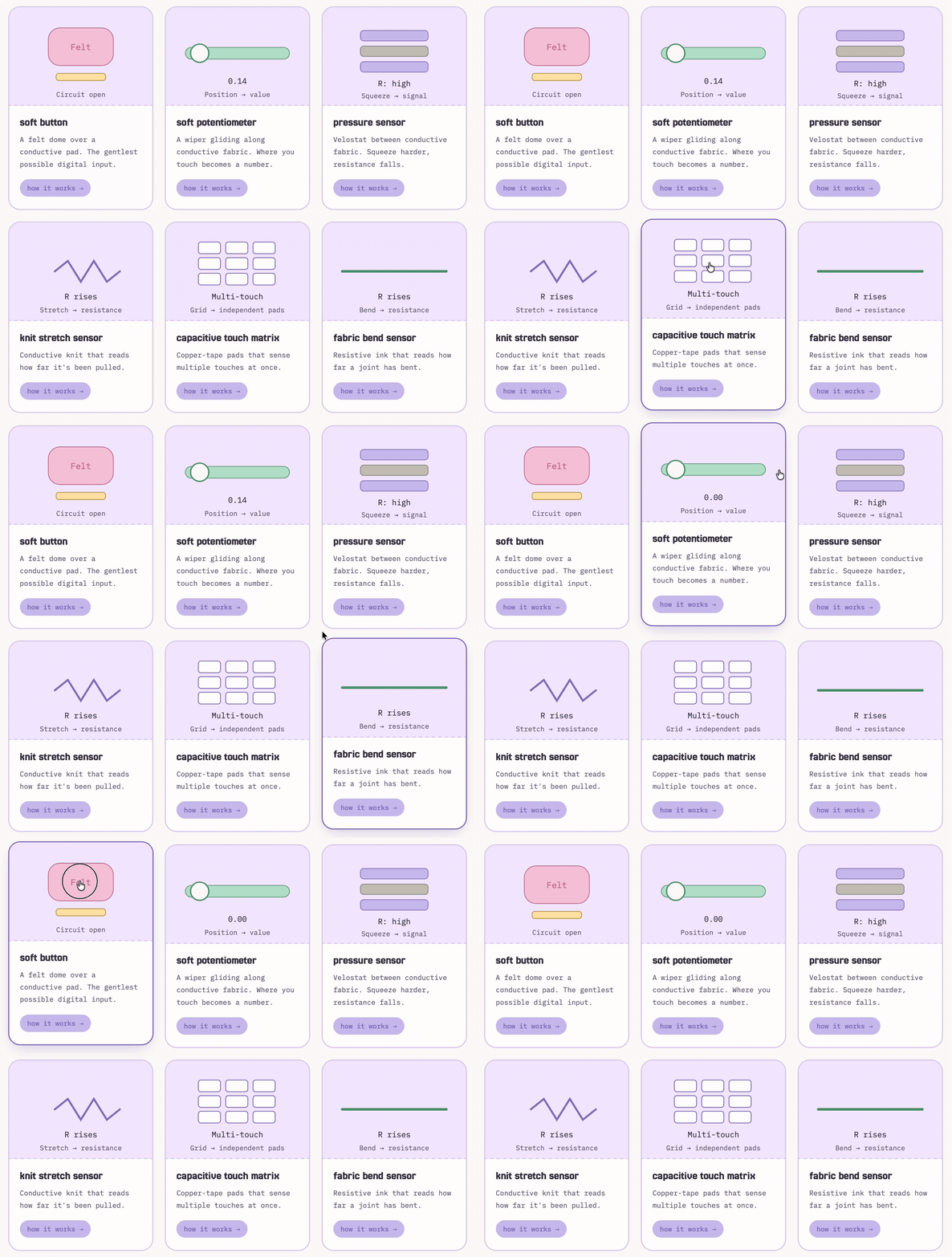
I’ve spent the last few weeks building Soft Components — a digital library of soft electronic components. Buttons made of felt. Potentiometers made of fabric. Sensors you can squeeze. Each entry pairs an interactive demo with the physics, the material science, and the design thinking underneath it.
The premise: what if you could actually feel how a soft sensor behaves before you ever stitch one? No breadboard, no multimeter, no waiting for parts to arrive. Just a browser tab and a slider.
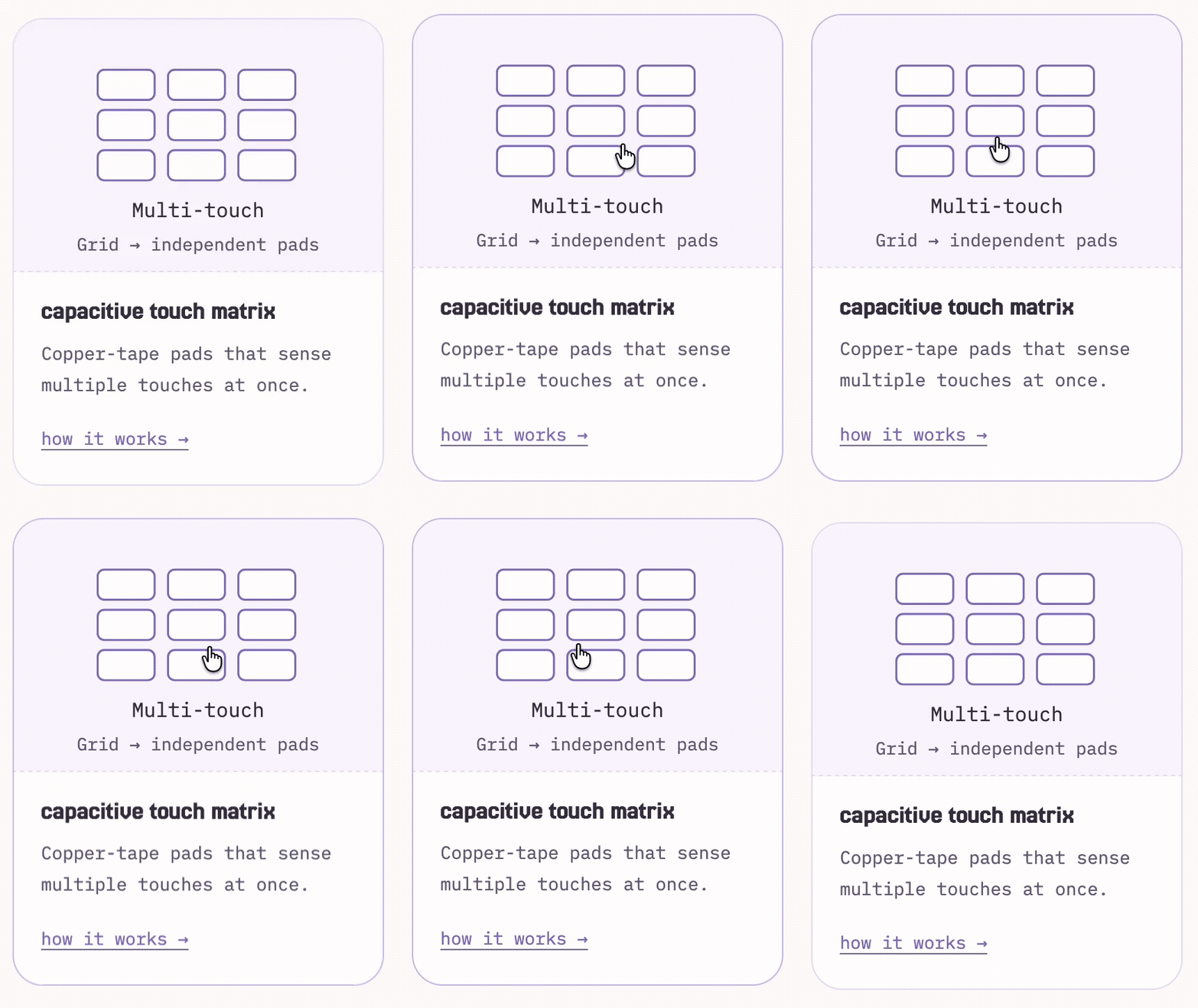
Nine components live so far, across three categories: input (soft button, soft potentiometer, pressure sensor, knit stretch sensor, capacitive touch matrix, fabric bend sensor), output (haptic motor, thermochromic reveal), and display (e-ink refresh). Every demo runs on real simulation rather than easing curves — soft materials have personalities that easing flattens out. Fibers relax. They don’t ping.
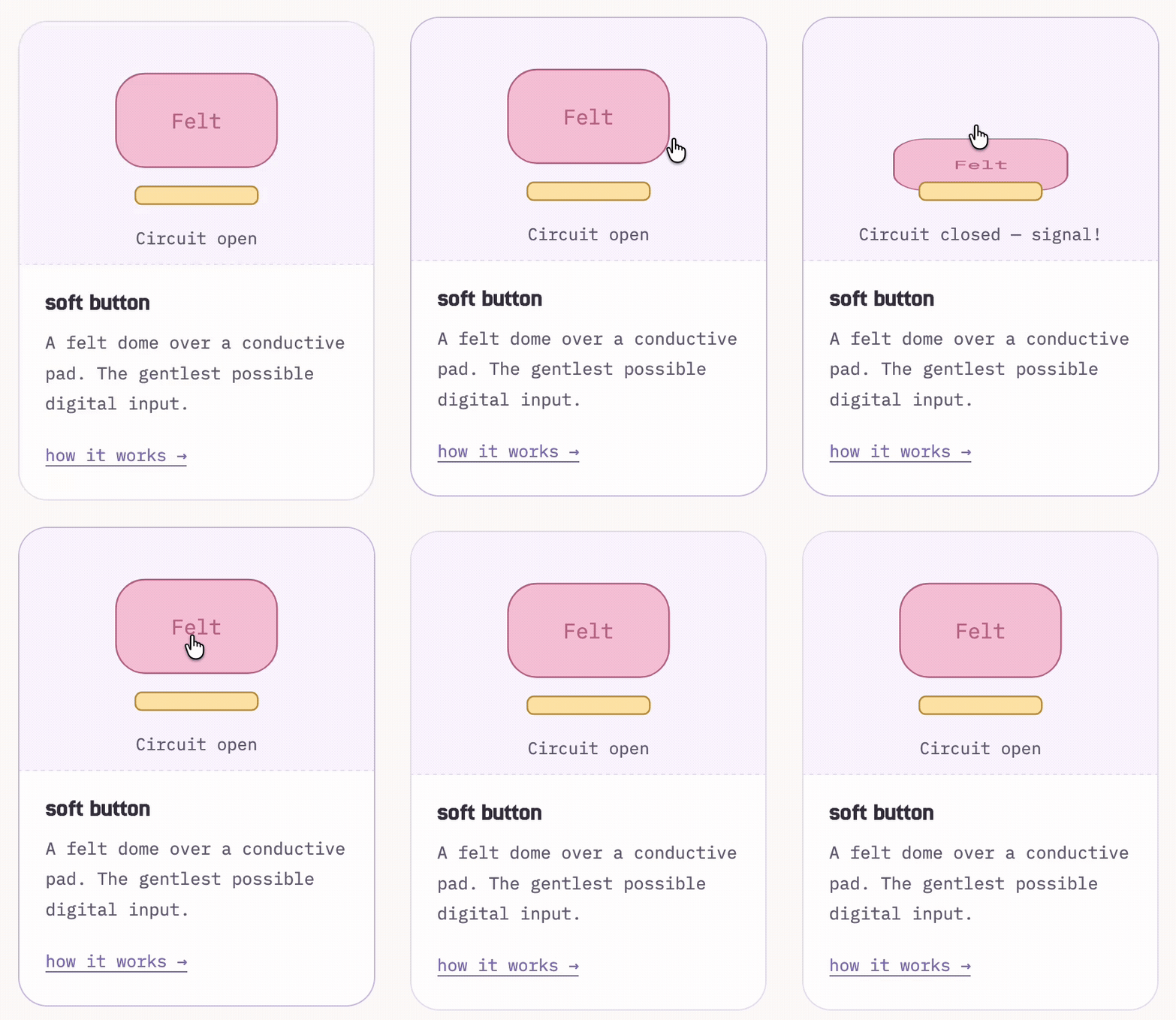
The felt button is the clearest example. Underneath it is a damped harmonic oscillator with exposed stiffness and damping parameters — push it from underdamped to overdamped and watch the character of the press change entirely, from a bouncy overshoot to a slow, heavy settle. That’s not a metaphor for how felt behaves. It’s the actual physics.
I used three different animation approaches across the library, deliberately: a hand-rolled spring class where the math itself is the point, Motion for spring-driven UI transitions, and GSAP timelines for sequenced signatures like the haptic motor’s buzz patterns. No single library was right for every component, so I didn’t force one.
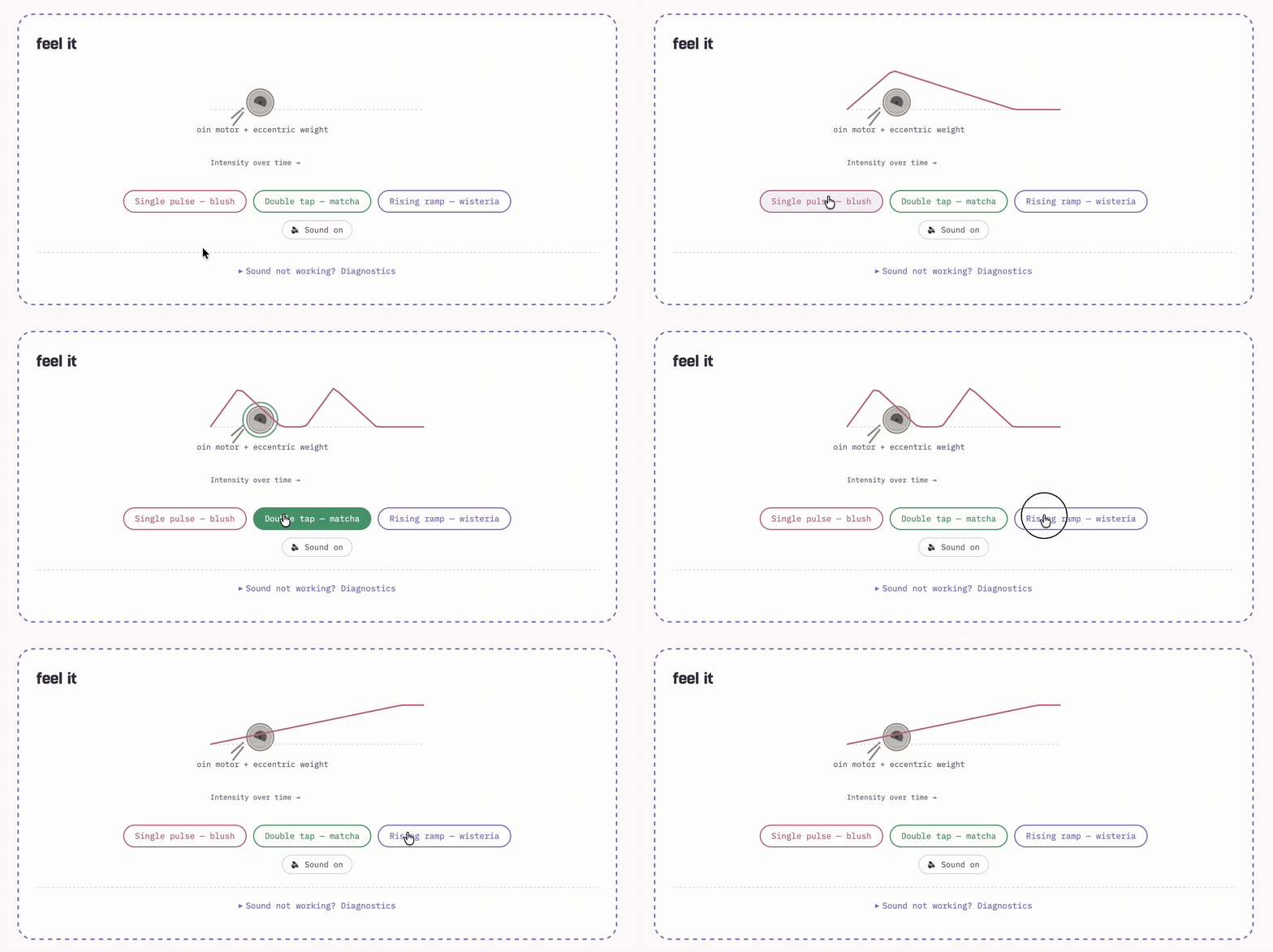
The haptic motor was the most fun to get right. The buzz is real audio, not a sound effect file — a Web Audio oscillator whose gain ramp samples the exact same envelope function that draws the visual intensity trace. One function, three outputs: motion, sound, and the plot on screen. When you press it, everything you see and hear is coming from the same source of truth.
The thermochromic entry reuses that same spring class in a completely different register — tuned overdamped, with no oscillation, just a lag. It’s a reasonable stand-in for how heat actually moves through fabric: quick to climb while thread is driven, slow to fade once the power cuts, because losing heat to open air is slower than gaining it from a direct current source. Same fifteen lines of spring math, two totally different physical stories.
None of this happens without the open documentation the e-textiles field has been building for over a decade. KOBAKANT’s How To Get What You Want — Hannah Perner-Wilson and Mika Satomi’s freely shared archive of DIY e-textile sensors and actuators since 2009 — taught a lot of this field how to build soft sensors by hand, mine included. I’ve tried to write the library in that same spirit: open, specific, and unafraid of the material getting a little messy.
This is part of my ongoing practice in soft electronics at Electrocute Lab, under the name I’ve been calling poetronics — electronics with the sensibility of a poem. It grew out of the soft computer, a textile computing object that asks what a soft computer can do that a hard computer never could.
Soft Components is still very much a work in progress. Comparison pages, textile LED diffusion, shape-memory actuators — there’s a lot more of this to build. But the core is up, it buzzes, it stretches, and it’s live: soft-components.vercel.app. ☻