understanding computer networks

In today’s digital age, computer networks have become an essential part of our daily lives. Computer networks are an important aspect of modern communication, enabling the exchange of information and resources among devices in various locations. They have revolutionized the way people and businesses communicate, providing efficient and cost-effective ways to connect with each other. From sending emails to connecting with friends on social media, computer networks have made communication and sharing of information easier than ever! In this post, we will discuss the basics of computer networks, their types, and how they work as well as the importance of computer networks and how they have revolutionized the way we work and communicate.
So what is a computer network?
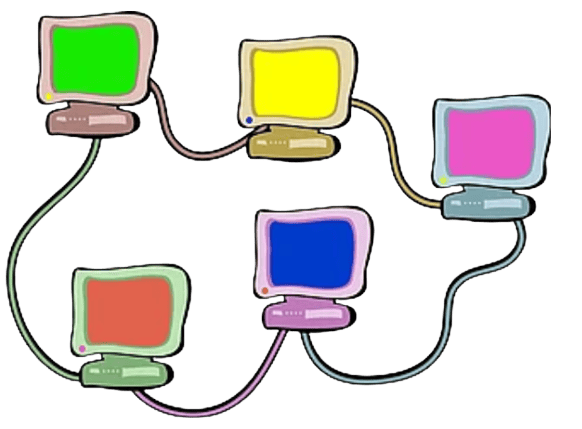
A computer network is a group of interconnected devices that can communicate and share resources with each other. These devices can be computers, printers, servers, routers, and other network-enabled devices. The primary purpose of a computer network is to facilitate communication and data sharing between devices.
Types of Computer Networks
There are different types of computer networks, each with its own set of characteristics and uses. The most common types of computer networks include:
Local Area Network (LAN)
A Local Area Network (LAN) is a network that connects devices in a limited geographical area, such as an office, building, or campus. LANs are used to share resources such as files, printers, and internet connections. LANs were developed in the 1960s for use by colleges, universities, and research facilities (such as NASA), primarily to connect computers to other computers. It wasn’t until the development of Ethernet technology (1973, at Xerox PARC), its commercialization (1980), and its standardization (1983) that LANs started to be used widely.
Wide Area Network (WAN)
A Wide Area Network (WAN) connects devices over a large geographical area, such as a city, country or even globally. WANs are used to connect devices from different locations and enable communication and data sharing between them. It is called a wide-area network because it spans beyond a single building or large campus to include multiple locations spread across a specific geographic area, or even the world. For example, businesses with many international branch offices use a WAN to connect office networks together.
Wireless Network
Wireless networks connect devices without the need for physical cables. Devices such as smartphones, laptops, and tablets can connect to wireless networks to access the internet or share resources with other devices. The use of a wireless network enables enterprises to avoid the costly process of introducing cables into buildings or as a connection between different equipment locations. Access points amplify Wi-Fi signals, so a device can be far from a router but still be connected to the network. When you connect to a Wi-Fi hotspot at a cafe, a hotel, an airport lounge, or another public place, you’re connecting to that business’s wireless network.
Metropolitan Area Networks (MANs)
Metropolitan Area Networks (MANs) are designed to connect devices within a city or a town. MAN is larger than a local area network (LAN) but smaller than a wide area network (WAN). MANs do not have to be in urban areas; the term “metropolitan” implies the size of the network, not the demographics of the area that it serves. Like WANs, a MAN is made up of interconnected LANs. Because MANs are smaller, they are usually more efficient than WANs, since data does not have to travel over large distances. MANs typically combine the networks of multiple organizations, instead of being managed by a single organization.
Personal Area Networks (PANs)
A personal area network (PAN) connects electronic devices within a user’s immediate area. PANs are used to connect devices in the immediate vicinity of an individual. The size of a PAN ranges from a few centimeters to a few meters. One of the most common real-world examples of a PAN is the connection between a Bluetooth earpiece and a smartphone or even a smartwatch.
How Computer Networks Work
Computer networks work by using a set of protocols or rules that govern how devices communicate with each other. The most common protocol used in computer networks is the Transmission Control Protocol/Internet Protocol (TCP/IP). This protocol ensures that data is transmitted reliably and efficiently between devices. Computer networks facilitate communication between devices through the use of various technologies such as routers, switches, modems and hubs. A router connects multiple networks, such as a LAN and a WAN, and manages the flow of data between them. Switches are used to connect devices within a network and enable the transfer of data between them. Modems are used to connect devices to the Internet and enable the transfer of data to and from the World Wide Web.
Networking Devices
-
Modem (Modulator/Demodulator) acts as an interface between the computer & communication channel thus, converting digital signals into analog signals and vice versa.
-
Hub is a device that allows one computer to connect to other computers in a network.
-
Switch is a smarter hub that provides centralized connection i.e. traffic is diverted to the particular port rather than all ports.
-
Router is a special purpose device that helps to connect two computer networks & to route the traffic in the best possible way. It also acts as a firewall.
-
Repeater: sometimes the signals on the internet becomes weaker before reaching the destination. The Repeater is used to regenerate the signals.
-
Bridges are used to connect two Local Area Network which are physically separated but uses same protocols.
-
Gateway is used to connect the users of LAN with the Internet.
Advantages of Computer Networks
Computer networks have many advantages, some of which include:
-
Resource sharing: Networks allow devices to share resources such as printers, scanners, files, internet access and storage devices. This enables businesses to save money on equipment and reducing the environmental impact of manufacturing.
-
Communication: Networks enable communication between devices, which can be used for video conferencing, messaging and file sharing. This increases productivity by enabling employees to work together on projects and communicate more efficiently.
-
Centralized management: Networks allow for centralized management of devices and resources, making it easier to manage large networks.
-
Scalability: Networks can be easily expanded to accommodate new devices and users.
They also provide a higher degree of security by enabling the use of firewalls, anti-virus software, and other security measures to protect against cyber attacks.
So why are computer networks important?
Facilitate Communication
One of the primary benefits of computer networks is the ability to facilitate communication. With the use of email, instant messaging, and video conferencing, individuals can communicate with each other in real-time regardless of their geographic location. This has made it possible for businesses to operate on a global scale, with employees and customers located in different parts of the world. Additionally, computer networks have made it easier for individuals to stay connected with family and friends, regardless of where they are located.
Data Sharing
Another important benefit of computer networks is the ability to share data. With the use of cloud storage and online collaboration tools, individuals and businesses can share and access files from anywhere in the world. This has made it easier for teams to collaborate on projects, even if they are located in different parts of the world. Additionally, computer networks have made it possible for businesses to store and access large amounts of data, which can be used to make informed decisions.
Automation
Computer networks have also revolutionized the way businesses operate by automating many manual tasks. For example, businesses can use computer networks to automate tasks such as payroll processing, inventory management, and customer relationship management. This has not only made it easier for businesses to operate, but it has also reduced the likelihood of errors and increased efficiency.
Companies like Cisco, IBM, Microsoft, Hewlett-Packard Company (HP), Dell, Intel, Verizon, Symantec, AT&T and many more makes networking a possible task. From mastering data communication and networking services, producing software for security, storage, and backup, designing & manufacturing software, networking hardware and storage services to consulting services, cloud computing, creating network security, routers, switches, telecommunication equipments, and other high technology services.
Conclusion
In today’s interconnected world, it’s hard to imagine a life without the internet. We rely on the internet to communicate, share information and stay connected. Computer networks are a critical aspect of modern communication, enabling the exchange of information and resources across various devices and locations. They have revolutionized the way businesses operate, increasing productivity and reducing costs. Understanding the basics of computer networks is essential for anyone looking to work in the field of IT or anyone interested in the technology that powers modern communication. As our reliance on technology grows, computer networks will continue to play an important role in connecting us to the world.